Senin, 26 Mei 2014

The new World Trade Center with the X-T1 and Fuji triumvirate of zooms

Most of the scaffolding has been removed from the new World Trade Center and the building has begun assuming a dominant role in the shifting visual landscape of New York City. Now that the weather has finally turned and there are green leaves on the trees, I am beginning to re-photograph the profile vistas of New York that include the WTC. I will be photographing it for the rest of the year for every angle and will also be including some aerials.

This morning on my bike ride to lower Manhattan I stopped in at 911 Memorial Park, which is now easily accessible without the need for tickets -- a "must" place for anyone now visiting the city. I had with me what is quickly becoming my favorite, all-around travel pack -- a Fuji X-T1 plus the three zooms: 10-24mm, 18-55mm, and 55-200mm. This makes a compact kit covering almost every focal length I would need, although there was one occasion where I wish I had something just a bit wider that 10mm.

I have used and tested quite a number of super-wide angle zooms. It is a tough lens to manufacture and, as a breed, they usually fall in quality, especially in the corners. I have found the Fuji 10-24mm to be best of breed in this category. The only other lens that may be its equal is the Nikon 14-24mm, and even it has substantial rectilinear distortion that, once corrected, knocks its practical focal length down to around 15-16mm after the crop.

Taken with the Fuji 10-24mm at 10mm and f/8. This is the only situation where I felt like I could have used something a bit wider, maybe like the Sigma 12-24mm on a Nikon. 
I went back the next day to re-photograph the scene above with a wider view and a more exacting compositional alignment. Click here to see the redo.

Shot with the 55-200mm.


More and more, as I select a lens kit for my trips, I find myself deciding on the Fuji 10-24mm zoom over the 14mm f/2.8. This is particularly the case when I know I will not be needing the extra one stop of aperture speed.  I have always loved the super-wide zoom range for travel and landscape work, but rarely been satisfied with the optical quality of even the best of this breed. Only the Nikon 14-24mm f/2.8 can deliver the same optical quality of the Fuji, and it is a monster of a lens compared to the compact package of the Fuji 10-24mm. You can read my entire hands-on review of this lens here.

The Fuji X-T1 camera can be ordered at:  BH-Photo  Amazon 
The Fuji 10-24mm f/4 lens can be ordered at: BH-Photo   Amazon

Jumat, 23 Mei 2014

Experimenting with multiple exposures in Photoshop

Each of the images below is a result of multiple exposing as many as six separate files of the same scene in Photoshop and allowing some of each layer to come through. The photos were not taken with the camera on a tripod so each layer is slightly out of register with the others. Several of the layers were blurred, either with a Gaussian blur or motion blur, to serve more as a softening background color for the other layers. Not much was done to the colors, but as the layers built up the colors intensified. The opacity of the top layer was dialed down to control the amount of bleed through from the layers below it.

These images were all recreated from images I pulled from situations I had photographed over the past few months. It was simply an experiment. I like the soft, dreamy feeling the technique imparts to each scene. Now that I know what the results are like I may intentionally photograph some future scenes with this technique specifically in mind.

Foggy morning with the Brooklyn Bridge. One layer in focus is placed over one out of focus layer of a slightly different camera position.


Florida sunrise.  One focused layer placed over the same image with Gaussian blur. A separate out of focus layer of clouds place over everything to add the mist.


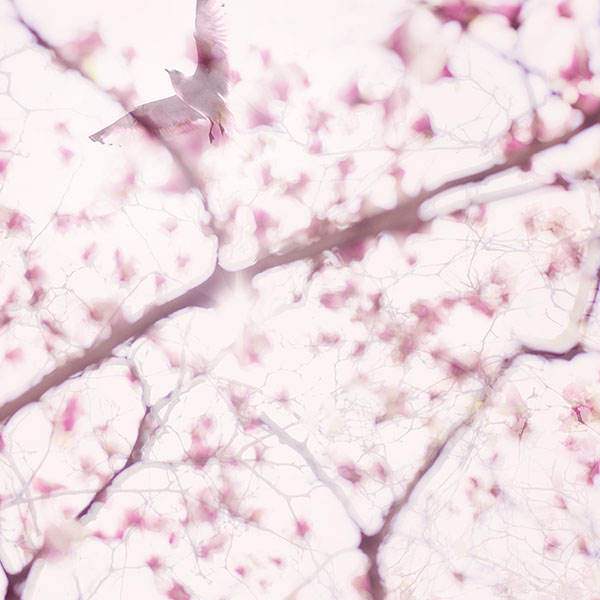
Spring blossoms, New York.  A blurred layer placed over a focused layer of the trees, and a photo of the gull placed beneath both.


Spring in the forest at Walden Pond. Motion blur in a vertical position caused the streaks. This layer was placed over a  focused layer of the forest. 


Senin, 19 Mei 2014

Weather resistant test for the Fuji X-T1

I didn't set out to test the weather resistant qualities of the new Fuji X-T1. Mother Nature decided to conduct the test for me. I was photographing along the Maine coast, primarily near Acadia National Park, but also down towards Camden. The weather was mostly overcast, misty, and sometimes raining -- just the way I like it, especially when doing time lapse water shots. I had photographed this area of Maine many time before, but usually went for the sunny weather and sunrises. This time around I was aiming for some moodier images in inclement weather typical of the region and suitable for making platinum prints.

I pack a different kit when shooting landscapes than I do for travel photography. For landscapes I tend to rely on very wide angle lenses so I packed the new Fuji 10-24mm zoom instead of the lighter 14mm. This is probably the biggest difference between my travel and landscape kits. I also carried one fast aperture lens -- in this case the 32mm f/1.4 -- and some Nikon close-up lenses for it. The zooms for the Fuji X series are really excellent, particularly the 10-24mm f/4 which I reviewed here.

This is the landscape travel kit I had with me when I was swamped with a wave while photographing the scene below. The small umbrella I had been using wasn't much protection against the sea water.
For one of the scenes I photographed, I positioned myself a bit too close to the incoming tidal surge that was breaking over the rocks, and one set of waves treated me, the camera, and tripod to an impromptu shower. The camera was already a little wet from the rain coming down, but the seawater finished us off with a good soaking.   Although the camera received a nice dousing I kept on shooting with it for a  while longer before calling it quits, and I can now attest to the fact that the X-T1 really is weather resistant.

I was also using the little Sirui T-025X tripod I have discussed in other blog posts as a really nice, compact (folds down to 11.6") match for the Fuji X-cameras. It too came through this situation with flying colors.

This is the scene taken around the time the ocean decided to treat me and the X-T1 to a shower.
The images below were taken over the course of three days, mostly cloudy and rainy, along the Maine coast near Camden and Acadia. The time lapse water shots were done using a 9-stop neutral density filter on the lens and shooting around f/16 with a shutter speed varying from 30 to 90 seconds depending upon how fast the water was moving.

Tide coming in, Camden, Maine, 2014 - 30 second exposure, Fuji 10-24mm Zoom.

Sun reflection, Seawall, Acadia, Maine, 2014 - Fuji 10-24mm lens, 60 second exposure.

Morning low tide, Southwest Harbor, Maine, 2014 - Fuji 18-55mm lens.

Lone boulder with advancing tide, Seawall, Acadia, Maine, 2014 - Fuji 55-200mm lens, 45 second exposure.

Coastal rocks at low tide, Acadia, Maine, 2014 - Fuji long zoom, 45 second exposure. 

Seagull and low tide, Southwest Harbor, Maine, 2014 - Fuji long zoom. 

Balanced rock, Seawall, Acadia, Maine, 2014 - Fuji 10-24mm lens, 40 second exposure.

Triangle pool, Seawall, Acadia, Maine, 2014 - Fuji 10-24mm lens, 60 second exposure.

Bass Harbor Head Lighthouse, Maine, 2014 - Fuji 10-24mm zoom, 90 second exposure.

Lobster boat, early morning, Maine, 2014 - Fuji long zoom.
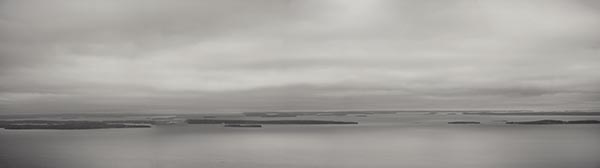
Cloudy day on Penobscot Bay, Camden, Maine, 2014 - Panorama assembled from three images taken with Fuji 18-55mm lens. 
Order the Fuji X-T1 camera at:  BH-Photo  Amazon 
Order the Fuji 10-24mm f/4 lens: BH-Photo   Amazon
Order the Sirui T-025X Carbon Fiber Tripod with C-10 Ball Head:  BH-Photo   Amazon
Order the Sirui T-005X Aluminum Tripod with C-10 Ball Head (Black): BH-Photo   Amazon

Sabtu, 17 Mei 2014

Sony's new RX100 III -- The best little camera in the world just got better

Sony's RX100 series is the perfect camera for a pro -- or anyone else for that matter -- who wants to have a capable camera with them at all times, but wants it to be the pocketable size of a point-and-shoot. It has a large 1" sensor packing enough horse power at 20.1mp to deliver exceptional image quality without sacrificing image size.

With the model II Sony added an accessory shoe that would accommodate an auxiliary EVF, the same one used on the RX1. With the model III the accessory shoe is gone and an SVGA OLED  EVF with 1.44M dots is now a built-in pop-up, all this while keeping the camera the same size -- amazing.


The appearance and size of the RX100 has not changed through its three iterations -- a minor miracle of Sony engineering..

The second big change made to the new model is the redesign of the Zeiss zoom lens to conform to a wider 24mm that now caps out at 70mm with a very bright variable aperture of f/1.8-2.8. Sad to lose the extended 100mm equivalent range of the prior models, but the wider 24mm  increase over the prior 28mm angle plus gain of approximately 1-stop of lens speed at 70mm is a major plus.


The dexterity of the flip screen has been increased considerably. It can now flip upward so you can see yourself from the front of the camera -- a boon to Instagram shooters. It does illustrate that this camera has appeal to all levels of use, from professional images grabbed by having an inconspicuous, easy-to-pack camera always with you to personal and social media cdewinaal shooting. This has been one of the chief features I have liked about this camera -- it is the portable enough to always have with you. More than once I have had to rely on it for some serious, opportunistic shooting.
 
The cost of the new model has increased to $798, but when you consider the very high cost of the former accessory EVF, having one built-in for only a $100 increase in price is a real saving.
 
The Sony Cyber-Shot DSC- RX100 III can be pre-ordered for June delivery:  BH-Photo  Amazon
 

Kamis, 15 Mei 2014

So where did I put that little X-T1 flash again?

Don't know about you, but I am constantly misplacing the little auxiliary flash (EF-X8) that came with my X-T1 as a replacement for a built-in model. Admittedly, its small size makes it convenient to pack, but it also makes it convenient to misplace or forget to pack.

Its tiny size makes it look like a toy, however it has a respectable guide number of 36' (11m) at ISO 200, or 26' (8m) at ISO 100. That is better that the Fuji EF-20 and EF-X20 flash units with their guide number of 20' (6.1 m) ISO 100.  The small size of the EF-X8 is a primarily a result of drawing its power from the camera battery.

The flash folds down when not in use and back up when needed. It cannot tilt back anymore that this so bouncing it is not an option, unless you improvise, as I demonstrate below.
The EF-8 flash comes with the typical modes for for rear curtain, slow sync, full on, and off. Accessibilty for these options and the new "Commander" mode is conveniently located on the Q menu, although flash exposure compensation must be set using the camera menu system. Don't mistake the Fujifilm "Commander" mode for the sophisticated Commander modes of Nikon and Cannon cameras used to control their off camera flash units. The Fujifilm "Commander" mode simply cuts out any pre-flash so the unit can be used to trigger a studio flash. Sync shutter speed of the EF-X8 is 1/180 second or slower.

When open, the EF-X8 sits high enough to avoid casting a shadow from the front lens hood, but it does not tilt backwards to be used to cast bounce light. See my tinfoil reflector work-around for this below.

The guide number is 36' (11m) at ISO 200 or 26' (8m) at ISO 100, which is more powerful that the other two small Fuji flashes  for X cameras, but far below the output of the much larger Fuji EF42. The little extra umph the EV-X8 has over the other two small Fuji flash units coupled with the height above the lens plane adds to its use as a fill flash in daylight or high contrasty lighting situations, and in slow-sync mode it provides just the right amount of extra fill in the shadows.

EF-20 or EF-X20 = 20' (6.1 m) ISO100 at 50 mm position
EF42 = 138' (42.06 m) ISO100 at 50 mm position

This is a make-shift tinfoil reflector I fashioned to re-direct the light from the flash so it would bounce off the white ceiling. It is held in place by a strip of velcro. It is made from one piece of tinfoil folded in thirds for stability and intentionally crumbled to soften the beam and make less directional. It is very easy to also dip the front down slightly to allow a tiny bit of direct light to hit the subject and fill shadows when necessary.
The Flash accessory for the X-T1 does cannot be tilted back to bounce the light from a ceiling or wall. I rarely like using a direct light right off the camera so I devised a simple reflector to bounce the light from a ceiling or wall. Using tinfoil instead of a white card to serve as the reflector provides a bounce light with more intensity.  Sooner or later some company is going to make this accessory for the EF-8 flash. Until they do, this work-around will get the job done. Sounds like a good idea for a Kickstarter project.

With the flash coming directly at the subject the light is harsh with pronounced shadows -- never a flattering way to light a portrait.

Here I added the tinfoil reflector to the flash to re-direct the light and bounce it off the ceiling. The result is much softer and pleasing. The flash was used in as full flash mode, not slow sync to illustrate how much softer it is than using it directly. Combined with slow sync it would be even softer.
Below is another sequence of images to demonstrate the use of softer bounce flash.

An interior scene back lit by window light with dark shadows. 

Filling the shadows with a direct flash is too harsh and artificial, and even casts its own shadow.
Bouncing the flash off the ceiling with the tinfoil reflector brings in the shadow detail without destroying the natural light of the scene. 
The three other accessory Fuji flash units that fit an X-camera can be ordered here:

Fujifilm EF-20 Shoe Mount Flash can be ordered at:  BH-Photo   Amazon
Fujifilm EF-X20 Shoe Mount Flash can be ordered at:  BH-Photo   Amazon
Fujifilm EF-42 Shoe Mount Flash can be ordered at:  BH-Photo   Amazon

Of the three flash units, the EF-20 is my favorite. It is small, can tilt to bounce, has a pull-out diffuser, and EV adjustment controls in 1/2 stop increments on the rear.

The EF-X20 has manual controls of power settings and EV adjustments in 1/3 stop increments, but it cannot tilt to bounce. It was made specifically for the X-cameras.

Selasa, 13 Mei 2014

A New York sunset with my X-T1

This typical New York rooftops view is what I see from the window where I do my photo editing. It was really interesting last night and changing rapidly. I keep the Fuji X-T1 on my desk next to me with the 18-55mm zoom on it, and used it to grab this changing scene. For the last photo, after the sun had set, I switched to the 56mm f/1.4 because of its shallower depth of field.

I did this first shot two way, straight as shown here and with a motion blur at 1/8th second with the camera moving vertically below.

I started playing around with motion blur by moving the camera vertically during a short exposure time of 1/8 second. 

Just got lucky with the double shooting diagonal rays from the setting sun.

For this scene after the sun had set I switched to the Fuji 56mm lens at f/1.4 for a narrow depth of field that would render the foreground window detail completely out of focus and give me an abstract composition combined with super-imposed reflections.

Same scene, middle of the night,  in-camera double exposure done on the X-T1.

That's it for my evening procrastination. Now it's back to editing my studio shoot from the day.

Minggu, 11 Mei 2014

Misty morning time exposures on the Hudson River

An early morning fog shrouded the watery areas around the city early Saturday morning -- my favorite conditions for taking long time exposures of water. I rode my bike uptown along the Hudson River to an area where  I knew there was an old bridge relic sitting in the water. It is the 69th Street Transfer Bridge that was part of the West Side Line of the New York Central Railroad, and a dock for floating rail cars across the Hudson River to the Weehawken Rail Yards in New Jersey. It had an innovative design that kept the boxcars from falling into the river while being loaded. Now it is all rusted out and graying wood crumbling into the river. I wanted to do a time exposure of the bridge while the fog was thick enough to hide the detail on the other side of the river.

For equipment, I packed a Fuji X-T1 -- my favorite camera to use of late -- along with two lenses, the short 18-55mm zoom and 14mm super-wide. To create a long exposure with the native 200 ISO of Fuji X- cameras I stacked two neutral density filters, a 9-stop and a 3-stop for a total of -12 stops of exposure. From experience I know that it takes at least 30 seconds to obtain the right amount of blurring of the flowing water in the Hudson River. For the shots below I ended up with 45 second exposures at around f/14.


This is the basic kit I used for these photos. The tripod in the back is a carbon fiber Sirui T-025X, the smallest full-size tripod I could find for a Fuji X-camera -- only 11.8" when folded but extending to 54.5". It fits easily in a backpack and even in the carry case on the rear of my bike.

I did a complete review of the Sirui T-025X tipod as the perfect travel companion to a Fuji X system. 

Order carbon fiber version of Sirui T-025X and C10 Ball head $239:  BH-Photo   
Order Sirui T-005X Aluminum Tripod with C-10 Ball Head (Black) $139:  BH-Photo