Kamis, 08 Mei 2014

Featured photographer: Jamie Grill

Jamie Grill is my daughter. She is also a photographer in her own right and one of the top stock photography lifestyle shooters in the world, specializing in children, families, and youth culture. Her images are marketed through Tetra Images, Blend Images, Getty Images, and show up on every top traditional stock agency throughout the world.

The reason for her success is that she has the ability to take the most mundane stock topic and infuse it with her own special sauce -- her unique ingredients including a thoughtful camera angle coupled with extremely tight, out-or-the-ordinary cropping that has other photographers, myself included, saying "How simple...Why didn't I think to do that."  She makes it look easy, but, if you've ever tried it, it never is.

Her ability to capture the essence of a situation with only a few brushstrokes adds impact and excitement that never loses sight of the essential story she is telling -- and no matter where she points her camera, her images always tell a story. This is the main secret of her successful career.

In the studio Jamie Grill works primarily with a Nikon D4 and 24-70mm f/2.8 zoom. On her own, as Jamie Grill Atlas and now mother of a daughter, Vivi, she captures daily life with a Nikon D5200 and likes using it with a 35mm f/1.8 lens wide open.

Below are a sampling of her images including a few of the concepts she was portraying. Some were done in the studio, some in her daily life as wife and mother -- all uniquely reflecting the special point of view she brings to each situation. To see more visit...

Jamie's website at: www.jamiegrill.com
Jamie's blog at whimsy images

23 days til spring…

happy weekending!


it’s friday!  time for a lazy day kind of weekend…

lunch time!

r o a d  t r i p !

feels like spring!


scenes from grandma’s house
shleepy.

snow day

sweet dreams


Selasa, 06 Mei 2014

Achieving mood with the Fuji camera profiles in Adobe Camera RAW

Ever wonder what the differences are between the various Fuji film profiles on the X-cameras? I did, and, now that they are included in the latest update to Adobe Camera Raw processor I have become even more intrigued because I can apply the profiles directly to the images coming out of my X-cameras.

Today I did a lifestyle shoot with a mother and two month old baby. I wanted to achieve a natural, candid look to the images that were shot in my studios. We prepared two sets: One was a dimly lit bedroom scene with light (a single 1000 watt tungsten through a large scrim) pouring through a window. The second scene was light and airy, back lit exclusively with window light. I was curious to see how the various Fuji X film profiles would handle these very different lighting situations.

Let's have a look.

This scene was lit by a single 1000 watt tungsten lamp coming through a scrim placed in from of a set window. There was no other fill used to bring out detail in the shadows. Below is a list of the images, each processed with one of the X-camera film profiles available in the new Adobe Camera RAW.  Click on each of them to download the full res image. Nothing has been done to any of these images other than applying the Fuji camera/film profile.

A situation like this is very contrasty. I found that the Adobe Standard did the best job of equalizing the highlights with the shadow details but does add a slight punch to the colors. Fuji's Provia-Standard was similar but not to the same extent. It really depends on what you are trying to achieve. The Velvia had the color punch we would expect, but it also enhanced the contrast so all shadow detail was lost. Astia-soft was a nice compromise for a mother/baby theme. It produced a delicate look.

For a more muted and natural color effect the Pro-Neg is the best option with the Hi having a bit more punch than the Standard.  I happen to like both of these, but it all boils down to personal taste. For this dimly lit, contrasy scene I found myself relying mostly on the Adobe Standard -- but then, I tend to like having detail in the shadows.

Here is a completely different set, back lit entirely with bright window light and no front fill.

This is much more of a high key lighting situation intended to create a light and delicate feeling. Once again, the list below has links the the actual files with different Fuji camera profiles and includes the Adobe Standard profile. 

In this brighter, back lit scene I leaned towards the more colorful profiles. The Velvia-Vivid added a bit of color punch that brightened the scene. Provia-Standard kept it looking a lot like what it really was, while the Pro-Neg profiles muted the colors for a much subtler effect.  Once again, it all comes down to what you are trying to achieve with the shot.

Being armed with a knowledge of what these profile effects look like in various lighting situations makes the post-processing workflow go a lot quicker.

Below are some more shots from the day with further post-processing enhancements added. All of these images were taken with a Fuji X-T1 and 56mm f/1.2 lens with aperture used towards the open end.

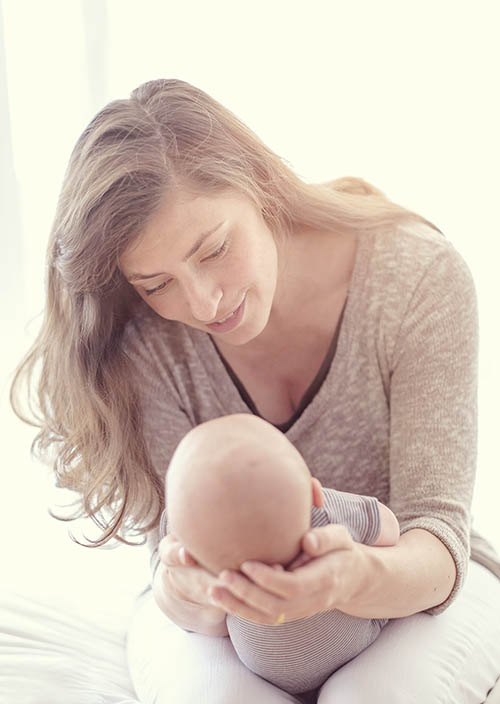
This is one of my favorite images from the day -- an early morning sunrise light pouring through the window, the mother oblivious to the early hour, her attention focused entirely on her new born baby and caught in the rejuvenating experience of the dawning of new life.  Lifestyle photography is all about knowing what you want to achieve before you lift the camera to your eye.


A shot like this cannot be faked easily. It takes a real mother with her now born baby to achieve the expression, coupled with a good camera with fast focus ability to capture it. 

The soft bokeh effect of the Fuji 56mm f/1.2 lens concentrates our attention on the babies face while allowing the mother's face to drift softly into an out-of-focus background.


Later this year I will be conducting a week long hands-on workshop on available light, lifestyle shooting at the Charleston Photography Workshops.

Senin, 05 Mei 2014

Going for close-up bokeh with a Fuji 56mm on an X-T1

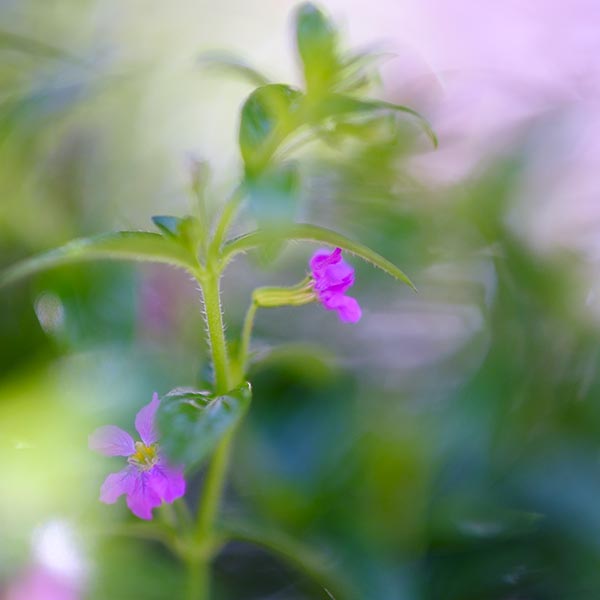
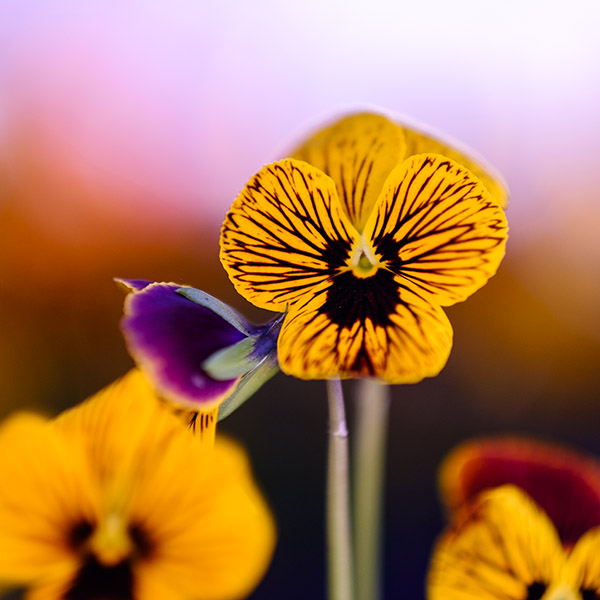
Instead of using a macro lens, I often prefer shooting my close-ups with a wide aperture prime lens used wide open. This provides a very shallow depth of field and an extreme bokeh effect in the out of focus areas that gives me abstract color and light patterns to use in the composition of the image. The Fiji 56mm f/1.2 lens has become one of my favorite lenses to use this way. When coupled with the convenience of the new tilt-screen of the X-T1 it makes a very convenient package to use for getting in tight with a low angle view of flowers and foliage.

This is the basic kit I used to take all the photos below: A Fuji X-T1 with tilt-screen mounted with the Fuji 56mm f/1.2 lens, a 3-stop neutral density filter to cut the exposure so I could work with wide open aperture, and a set of the 62mm Nikon 5T and 6T close up lenses mentioned in the blog yesterday. 
Of course using a lens at f/1.2 or f/1.4 on a very sunny day presents other problems when the native ISO is 200. You can easily see why if you are familiar with the "f/16 sunny rule" for manually calculating daylight exposures.

The rule goes like this: On a bright sunny day with the aperture set to f/16 the shutter speed would equal the ISO -- in our case 1/200 second. Moving the aperture from f/16 to f/1.4 is 7 stops and would require an equal move with the shutter speed from 1/200 second to 1/12800 second -- almost 2 stops beyond the 1/4000 second capability of the camera. To solve this problem I use a 2 to 3 stop neutral density filter. This provides me with a comfortable working shutter speed while maintaining the open aperture I want.

All the photos below of plants I found in the local farmers market were taken using very open apertures ranging from f/1.2 to f/2. The vibrant colors were created by processing the RAW files with the Velvia/VIVID camera color profile now available in Adobe Camera Raw.

The circular bokeh background of this image is one of my favorites. Shot at f/1.2 only the stem and some of the fuzz on the pussy willow are in focus. The overall rust color is from other stems in the background. 


My camera was set to aperture priority mode. For this shot I dialed in a +1 exposure compensation to maintain the brightness of the large, all-white area of the flower, otherwise it would have gone dark through under-exposure.


Keeping the background flowers completely out of focus at f/1.4 creates a color cast to harmonize with the foreground flower. 


Ahhhh...one of my favorite summer tastes is fresh basil. 


I put the focus on the right edge of the second egg because it had a rippled surface texture that would make it stand out.

A perfect example of using shallow depth of field in close. I wanted just the tip of the stem and some of the leaf surface in focus, and everything else drifting out of focus. The red apple has just enough detail to let us know what it is. I didn't color correct the bluish cast that was a result of the apples being in shadow. I rather like the color. 

For this shot and the two below I used the tilt screen of the X-T1 to place the camera very low so it would be on the same level as the subject.  


If you are planning on purchasing this lens or filters, you can help support this site at no extra cost to you by purchasing from one of our affiliate sellers listed below -- and thanks for your support.


The Hoya 62mm Neutral Density (NDX8) 0.9 Filter can be ordered from:  BH-Photo    

The Nikon close-up lenses I use are no longer available, but can occasionally be found on eBay. There are two lenses, a 5T and 6T. The 5T is +1.5x and the 6T is +2.8x. Close-up lenses are often sold in kits of +1, +2, and +4. I have found that the +1 and +2 usually work quite well, but +4 often pushes the limits and gets a little soft. Of course, sometimes the soft effect adds something pleasant to the mix. 

Here is a Hoya close up kit:
Hoya 62mm Close-Up Kit (Multi-Coated):   BH-Photo

The closest I have found to the Nikon +2.7x lens is this +3x by Hoya:  
Hoya 62mm +3 Close-Up Pro 1 Digital Multi-Coated Glass Filter:  BH-Photo

...and in case you are thinking of ordering the Fuji 56mm f/1.2 lens:
The Fujifilm XF 56mm f/1.2 R Lens can be ordered from:   BH-Photo   Amazon  

Sabtu, 03 Mei 2014

Nikon close-up attachment lenses with Fuji X lenses

I have mentioned many times in this blog how I use the Nikon close-up attachment lenses on my Fuji X lenses, particularly on the 56mm, 35mm, and 55-200mm zoom. These lenses are no longer made. I am fortunate to have a complete set from my Nikon film days. I have noticed they are frequently available on Ebay.

What separates these attachment lenses from regular close-up filters is that they are made up of two achromatic lens elements cemented together. This goes far to preserving the optical quality of the taking lens and does not introduce the softening effects and distortions from most single element close-up filters.

A 5T close-up attachment lens on the Fuji 56mm adds +1.5 diopter close-up factor. The 6T adds +2.8 diopters.
There are two sets of these attachment lenses, one in 52mm size, the other in 62mm size. Fortunately for us, most of the Fuji X lenses you would use with these close-ups are one of those two sizes. 3T and 4T have a 52mm filter size and are intended for full frame lenses from 85mm to 200mm. The 5T and 6T have a 62mm filter size and intended to be used with full frame lenses from 70mm to 210mm. I have used all of these close-up attachments with other focal lengths for years and never noticed a problem, although the most likely use would be with the normal to long focal lengths lenses. 

A true macro lens will get you closer and be the best optical choice for close-up work. The principle reason for using close-up attachments instead is to take advantage of the fast aperture bokeh effects possible with f/1.4 and f/1.2 apertures. An ancillary reason is that it is far easier to tuck one or two of these filters in your camera bag for an occasional close-up need, than it is to take up room with a separate macro lens. 

The Fuji 56mm is the lens where the close-up capabilities would be most apparent. Even with close-up portraits, the 56mm sometimes does not get in close enough. Next in line would be the 55-200mm zoom. This lens already has impressive close-up abilities for a long zoom, but the Nikon 5T and 6T allow it to get in tight enough for serious macro magnification while still maintaining a comfortable distance with the telephoto range of the lens.

This test scene was set up to see how the various Fuji lenses might would work with close-up attachment lens. 
3T and 5T
Two elements1.5 Diopters62mm thread mountThis lens is intended for use with telephotos (hence the "T" at the end of the name) but is reputedly excellent with all lenses that it'll fit.

4T and 6T
Two elements2.9 Diopters52mm thread mountThis lens is intended for use with telephotos (hence the "T" at the end of the name) but is reputedly excellent with all lenses that it'll fit.

The 5T and 6T are 62mm and fit the 56mm f/1.2 Fuji lens, and the 55-200mm zoom. With a 58-62mm step-up ring (shown on the right) they the 62mm set will also fit the Fuji 18-55mm zoom. 
3T and 5T
Two elements1.5 Diopters62mm thread mountThis lens is intended for use with telephotos (hence the "T" at the end of the name) but is reputedly excellent with all lenses that it'll fit.

4T and 6T
Two elements2.9 Diopters52mm thread mountThis lens is intended for use with telephotos (hence the "T" at the end of the name) but is reputedly excellent with all lenses that it'll fit.

The 3T and 4T are 52mm filter size and fit the Fuji 35mm f/1.4 lens. 

This was taken with the Fuji 56mm lens set to its closest distance. This lens would benefit from having a close-up attachment to come in tighter.
56mm with 5T (+1.5 diopters)

56mm with 6T (+2.9 diopters)

35mm with no filter. This lens already gets in tight. 

35mm with 4T (+2.9 diopters)

35mm  with 3T (+1.5 diopters)
55-200mm with no filter. This lens has an impressive close-up range for a long focal length zoom. Adding the Nikon 5T or 6T really allows it to get in tight enough for macro work. Plus the Nikon close up attachments were computed specifically for this focal length so the performance is exceptional. 

55-200mm with 6T (+2.9 diopters). This is very close to 1:1 macro. 

55-200mm with 5T (+1.5 diopters)
18-55mm with no filter.  Like the 35mm, this zoom gets in close already. 

18-55mm with 6T (+2.9 diopters)

18-55mm with 5T (+1.5 diopters)
In my next blog post I will discuss using these filters with a fast aperture lens like the Fuji 56mm f/1.2 lens specifically to create a bokeh effect with a close-up subject.